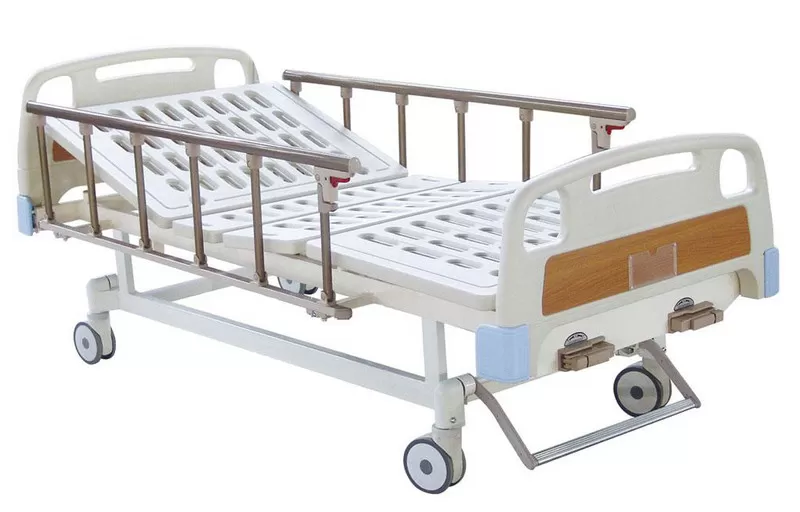
Quick answer: For dementia care the safest common setup is a low bed height at night with rails used only where the care team agrees they help. A 3-crank hi-lo bed at KSh 70,000 or a 3-function electric bed at KSh 120,000 gives that range. Rails are not automatically safer for a patient who may try to climb over them.
The rails question, honestly
Rails stop some patients rolling out. For a patient who wanders or becomes agitated, rails can turn a low roll into a fall from a greater height. This is a decision for the nurse, doctor or occupational therapist who knows the patient, and it can change as the condition progresses. We fit rails, and we will also fit a bed without them if that is what the care team advises.
Lower the bed at night
A bed that drops low reduces the height of any fall, which is why the hi-lo function is worth more here than the extra crank on a cheaper bed. Combine it with a clear floor, a night light and the route to the toilet kept free.
Keep the room familiar
Familiar bedding, familiar furniture and the bed in the same place it always was help more than any equipment feature. Introduce the new bed during the day, not at bedtime.
Frequently asked questions
Should a dementia patient have bed rails?
Sometimes yes and sometimes no. It depends on whether the patient is likely to climb over them. Ask the clinician or occupational therapist who has assessed them.
Which bed is best for dementia care at home in Kenya?
A bed with height adjustment, so it can be lowered at night. The 3-crank manual at KSh 70,000 and the 3-function electric at KSh 120,000 both do this.
Talk it through in one call
Describe the patient and the room. We name one bed and one mattress.
Page updated 2026-09-08. Prices confirmed on the call before dispatch.